AI training for employees costs around €860 per person for a 7.5-hour open seminar at a German chamber of commerce, from €499 plus VAT for the whole group as an in-house workshop with us, and €2,590 plus VAT or more per person for a certificate course. Public funding in Germany mainly covers longer courses: the Federal Employment Agency (Bundesagentur für Arbeit) pays only for training of more than 120 hours, and for short sessions there are hardly any grants in autumn 2026.
The course fee is usually the smaller item. The larger one is your team’s working time, which Destatis, Germany’s Federal Statistical Office, puts at an average of €45.00 per hour worked in 2025 (press release in German). This post calculates what each format costs, when each one is worth it and which funding programmes are open as of November 2026. Several well-known programmes are suspended or closed to new applications, and those are listed too.
What is AI training for employees?
AI training for employees teaches your team to use AI tools such as ChatGPT, Copilot or your own assistant safely and usefully in daily work. It covers how such models work and where they make mistakes, your company’s rules on customer data and copyright, and above all practice on real tasks. In our guide on how to implement AI in business, it belongs to the stage in which the team learns the first workflow.
There is also a legal side. Article 4 of the EU AI Act asks companies that use AI to take measures that support their staff’s AI literacy. In its AI literacy Q&A, the European Commission states that no certificate is required, that you can keep an internal record of trainings, and that relying only on the instructions for use of an AI system is not enough (as of November 2026, not legal advice). Who is covered and how to document the measures is explained in our guide to the AI literacy requirements.
Four items belong in every cost calculation. The course fee is charged per person for open seminars and per group for in-house workshops. Working time is the time people spend in training instead of at work. Travel covers trips and possibly a hotel for in-person seminars. Follow-up is the time it takes to apply what was learned to your own workflows. Working time is almost always the largest of the four.
What do the training formats cost?
Prices on the market vary widely because the formats differ widely. We checked these examples on the providers’ websites in November 2026.
| Format | Scope | Price | Example |
|---|---|---|---|
| Open seminar | 7.5 hours live online | €860 per person | IHK Berlin |
| In-house workshop | half a day to a full day | from €499 plus VAT per session | Pharen |
| Certificate course | 64 hours live plus around 25 hours of self-study | €2,590 plus VAT per person | IHK Hannover |
| Funded further training | more than 120 hours, often several weeks full-time | up to 100 percent fundable | approved training providers |
Open seminars
In an open seminar, people from different companies learn together. The Berlin Chamber of Industry and Commerce (IHK Berlin) offers a course on understanding and applying the EU AI Act, three live online sessions of 2.5 hours each for €860, with a certificate of attendance. That suits individuals who need one subject in depth, for example the person who owns your AI rules. For a whole team it gets expensive quickly, and nobody practises on your own workflows.
In-house workshops
In an in-house workshop the training comes to you, on site or by video, and everyone practises on your company’s tasks. Our workshops start at €499 plus VAT per session, and the price depends on length, group size and whether we come to you. The formats include talks of 30 to 60 minutes, half-day workshops on AI literacy under the EU AI Act or for management, and full-day workshops in which your team builds its own assistants.
Certificate courses
Longer courses are for people who are meant to drive AI forward in the company. The webinar course AI Manager (IHK) at the Hannover Chamber of Industry and Commerce covers 64 hours live and around 25 hours of self-study for €2,590 plus VAT, with a final test and an IHK certificate. The chamber itself points out that this is not a formal qualification under public law. For one person who steers your AI projects it can make sense. For the whole team it is far more than the task requires.
E-learning
Self-study courses are cheap and flexible and work best as a supplement. The European Commission’s point about instructions for use applies here as well, and a video course without practice on your own tasks leaves the transfer to daily work to each person.
Worked example: what does training cost for 12 people?
Take a consulting firm with 12 employees who all work with AI tools. We calculate with €45.00 labour cost per hour and leave out travel.
| Item | Open seminar for everyone | Half-day in-house workshop |
|---|---|---|
| Course fee | 12 × €860 = €10,320 | from €499 plus VAT |
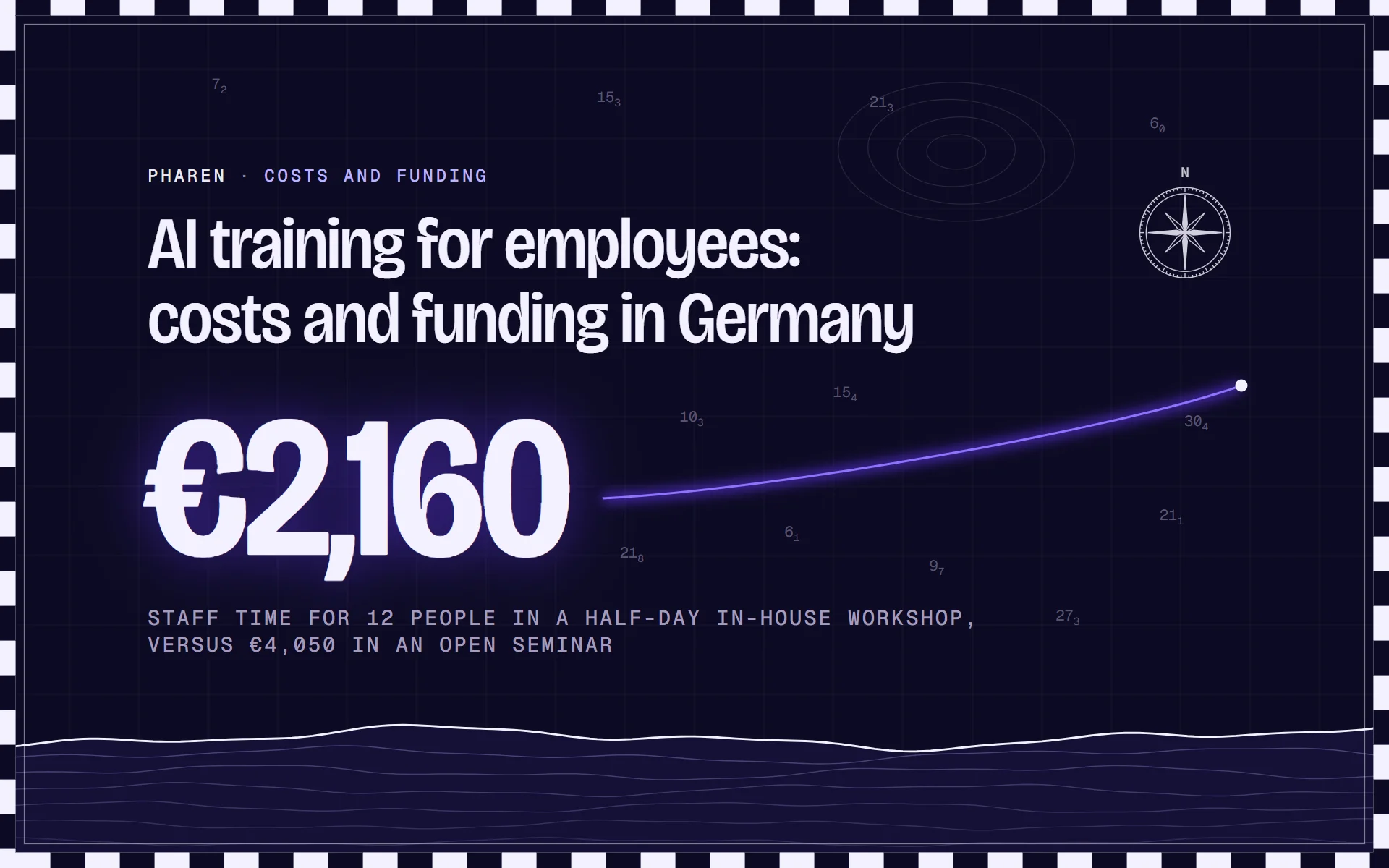
| Working time | 12 × 7.5 hours × €45 = €4,050 | 12 × 4 hours × €45 = €2,160 |
| Total | €14,370 | €2,160 plus the fee |
The in-house workshop would only cost more than the open seminar at a fee above €12,210. The content differs as well. In the open seminar your people learn about the regulation. In the in-house workshop they practise on your own quotes and your own inbox, with your rules. For the person who owns the topic in your company, an open seminar can still make sense in addition.
How much time comes back afterwards depends on the tasks. In the incoming invoice process at Hobeck, around 160 invoices a month now take about 12 hours less. That saving comes from a workflow that was built for it. Training helps the team spot the tasks where such a workflow pays off.
How does the Federal Employment Agency fund training?
The most important programme for companies is funding for further training under the Qualification Opportunities Act (Qualifizierungschancengesetz). The Federal Employment Agency lists these conditions, among others (page in German):
- The training lasts more than 120 hours. It does not have to take place in one block.
- The training provider and the course are approved for funding.
- The training goes beyond a short adaptation to the current job. Training on company-specific software is not funded.
Companies that meet these conditions receive grants towards course costs and wages. The rates depend on company size, as the page of the employment agency for Saarland summarises the national rules (in German):
| Company size | Course costs | Wage grant |
|---|---|---|
| Fewer than 50 employees | usually 100 percent | up to 75 percent |
| 50 to 499 employees | up to 50 percent | up to 50 percent |
| 500 or more employees | up to 25 percent | up to 25 percent |
With a works agreement or collective agreement on further training, the rates rise by 5 percentage points. In companies with fewer than 500 employees, course costs for employees aged 45 or over and for severely disabled employees can be covered up to 100 percent. Only the agency’s employer service (Arbeitgeber-Service) gives a binding answer, on 0800 4 555520.
An example with assumptions: a trades business with 30 employees sends its office manager on an approved AI course full-time for two months. Her gross salary is €3,500 a month. The wage grant is up to 75 percent of €7,000, so up to €5,250, and the agency usually covers the course costs in full. The business mainly carries the two months in which the office runs without her.
None of this applies to most AI training. A half-day has 4 hours, and the IHK course in the table above comes to around 89 hours by our count. Funding goes mainly to long retraining and to courses that large training providers run full-time over several weeks.
Does BAFA pay for AI training?
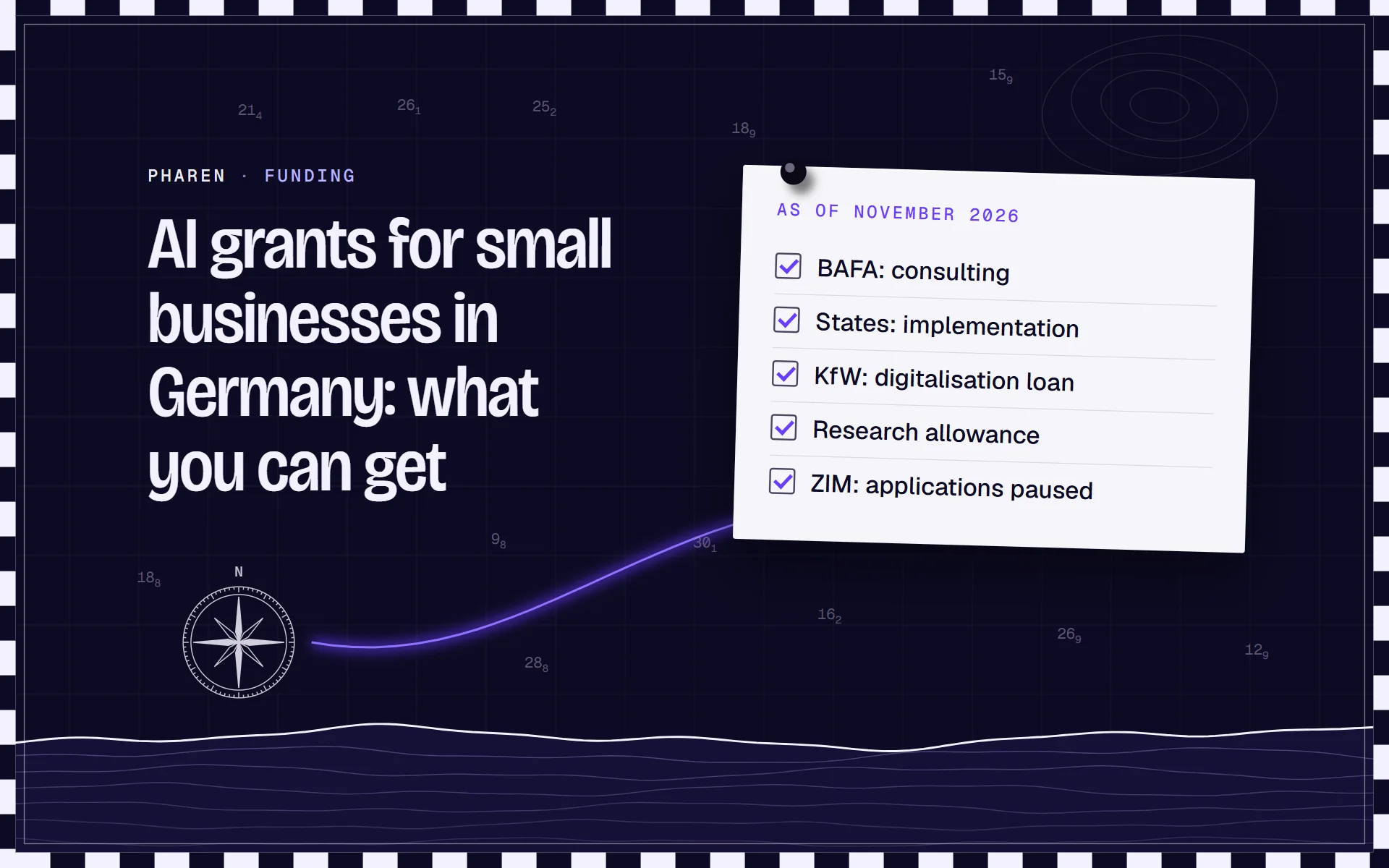
No. The Federal Office for Economic Affairs and Export Control (BAFA) subsidises business consulting for small and medium-sized companies on economic, financial, personnel and organisational questions. The programme has been extended until 31 December 2028, and from 1 January 2027 changed conditions apply, for example applying through ELSTER, the German tax authorities’ online portal, or BundID, the federal citizen account. Consulting may only begin once BAFA’s information letter has arrived, and signing the consulting contract already counts as the start.
According to the IHK Gießen-Friedberg, the programme funds only conceptual consulting carried out individually for one company, and a training session does not fit that description. Under the rates of the guideline valid until the end of 2026, companies in the eastern German states receive 80 percent, at most €2,800. Berlin and the Leipzig region count as western states for this purpose, with 50 percent, at most €1,750. Whether the rates stay the same from 2027 had not been published in November 2026.
For individual consulting on introducing AI, the programme can fit if a consultant registered with BAFA does the work. Whether a specific project qualifies is decided by BAFA.
What funding is there in Saxony?
Saxony, the federal state around Leipzig, long had one of the best programmes for in-company training. In autumn 2026 three programmes matter.
- The in-company training grant (Betriebliche Weiterbildung) of the Saxon development bank SAB is suspended. According to the SAB, the 2025/2026 budget has no further funds, and applications are not possible. When it last ran, it usually paid 50 percent, at most €4,500.
- The digitalisation grant (Digitalisierungszuschuss, Digi-Z) has stopped taking applications in most regions since 17 July 2026. According to the SAB, applications are still possible in the city of Leipzig, the district of Leipzig and North Saxony. Training counts there only as part of introducing a digital solution, at most 20 percent of eligible costs under the funding guideline, with project costs of at least €5,000.
- Qualification time (Qualifizierungszeit) starts on 1 January 2027. After six months in a company, employees in Saxony get three paid working days a year for recognised training. According to the Free State of Saxony, companies with up to 20 employees are reimbursed €115 per day, and participants pay the course fee themselves.
We left out programmes whose status we could not check on the funding body’s own page.
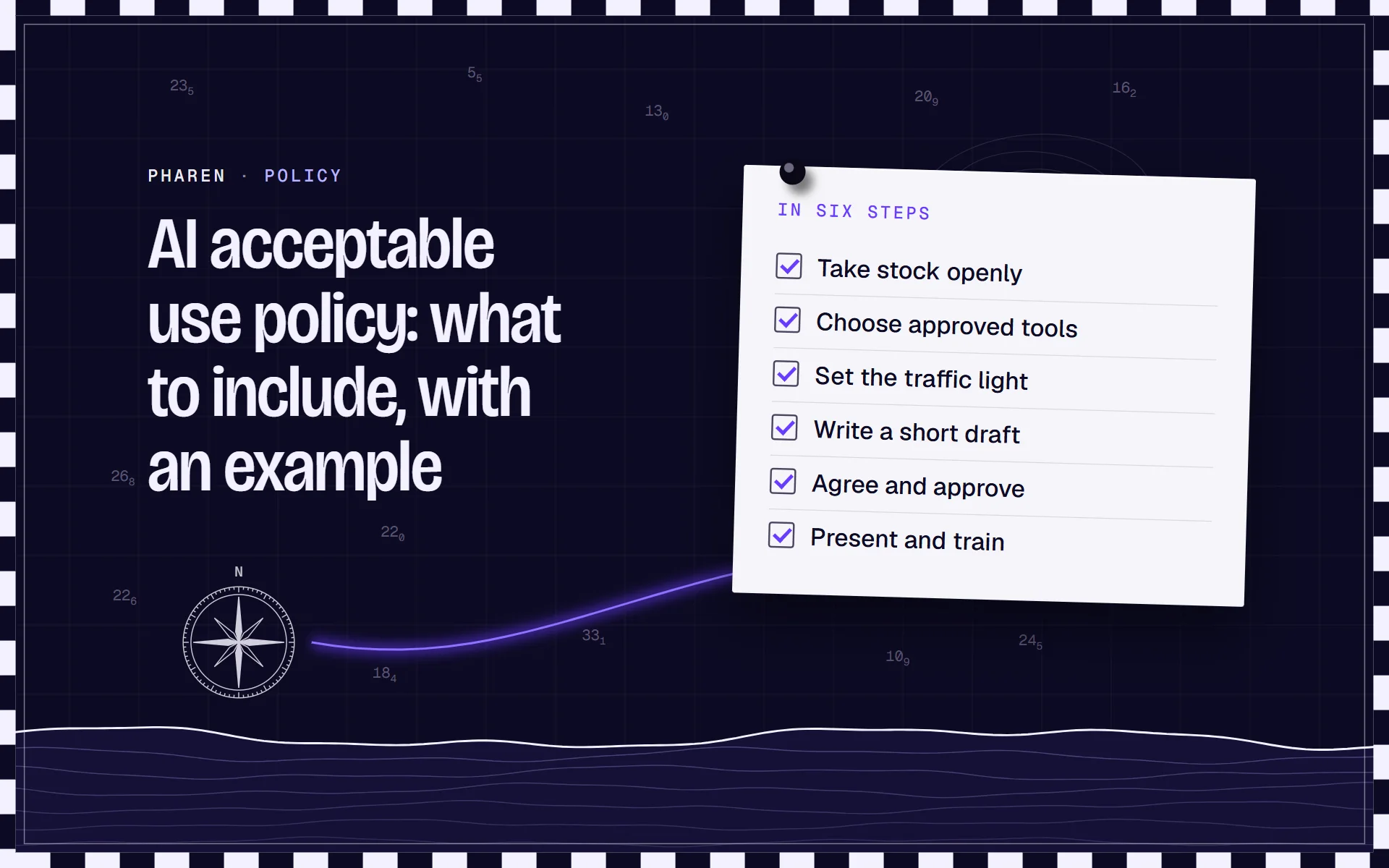
How do you choose the right training in six steps?
- Clarify the need. Who works with which AI tools? A list by role is enough, and it is also the start of your internal record under Article 4.
- Collect real tasks. Bring two or three real tasks per role to the training. Our guide to AI use cases shows how to find them, and the AI opportunity analysis does it with you in half a day.
- Choose the format. Train the team together in-house, and send individual owners of the topic to an open seminar or a course in addition.
- Check funding first. For courses above 120 hours, call the employer service. For consulting, wait for the BAFA information letter. In the Leipzig region, check Digi-Z. BAFA and Digi-Z exclude projects that have already started.
- Count every cost. Add course fee, working time and travel, with your own hourly rates.
- Document and refresh. Record date, content and participants. New people and new tools get a short refresher.
What are the limits and common mistakes?
The most expensive mistake is applying after the start. BAFA and Digi-Z explicitly exclude projects that have already begun, and with the employment agency the conversation also belongs before the booking.
The second is choosing a certificate where practice would do. Neither the EU AI Act nor the European Commission requires a certificate for all employees. A long course for the whole workforce costs a lot and helps little if people still do not know at their own desk which customer data may go into the tool.
The third is chasing funding at any price. Stretching a 4-hour session to 120 hours to make it eligible costs more working time than the grant returns. This post has limits too. Funding conditions change, often at the turn of the year. Only the funding bodies give binding answers, and this is neither funding nor legal advice.
Frequently asked questions about AI training for employees
How much does AI training for employees cost?
An open seminar at the IHK Berlin costs €860 per person for 7.5 hours. In-house workshops with us start at €499 plus VAT per session for the whole group, and certificate courses such as the one at the IHK Hannover cost €2,590 plus VAT per person. Working time comes on top, at an average of €45 per hour and person.
Is AI training funded by the state in Germany?
Short sessions of a few hours or days get hardly any funding in autumn 2026. The Federal Employment Agency funds training of more than 120 hours with approved providers. In Saxony, the SAB’s in-company training grant is currently suspended.
Does BAFA fund AI training?
No. BAFA funds business consulting and does not fund training. Individual consulting on introducing AI can qualify if a registered consultant does it and you apply before the start. The programme runs until the end of 2028, with changed conditions from 2027.
Do employees need an AI certificate?
No. According to the European Commission, AI literacy under Article 4 needs no certificate, and you can keep an internal record of the measures. A certificate can make sense for the individual people who own the topic.
What does AI literacy training cover?
AI literacy training covers how AI models work and where they make mistakes, which uses your company allows and which data must never go into an AI tool, such as customer data. Our half-day format on AI literacy under the EU AI Act ends with a certificate of attendance for each participant, which you can keep for your internal record.
Summary
AI training for employees does not have to cost five figures. For most teams, one shared workshop on their own tasks costs less than individual places in open seminars, and working time is a larger item than the fee. Funding goes mainly to courses of more than 120 hours, and you always apply before the start. If you want to know which format fits your team and what it costs, get in touch.