

In short
An on-premise AI platform runs on your own infrastructure instead of the vendor's cloud. Of nine platforms we checked, three can be self hosted: Pharen Hub with a self hosted licence from €20, Mistral Vibe on the Enterprise plan and Langdock from 5,000 seats. DeutschlandGPT explicitly rules out on-premise. Microsoft 365 Copilot, Google Workspace, Notion AI and ChatGPT do not offer it.
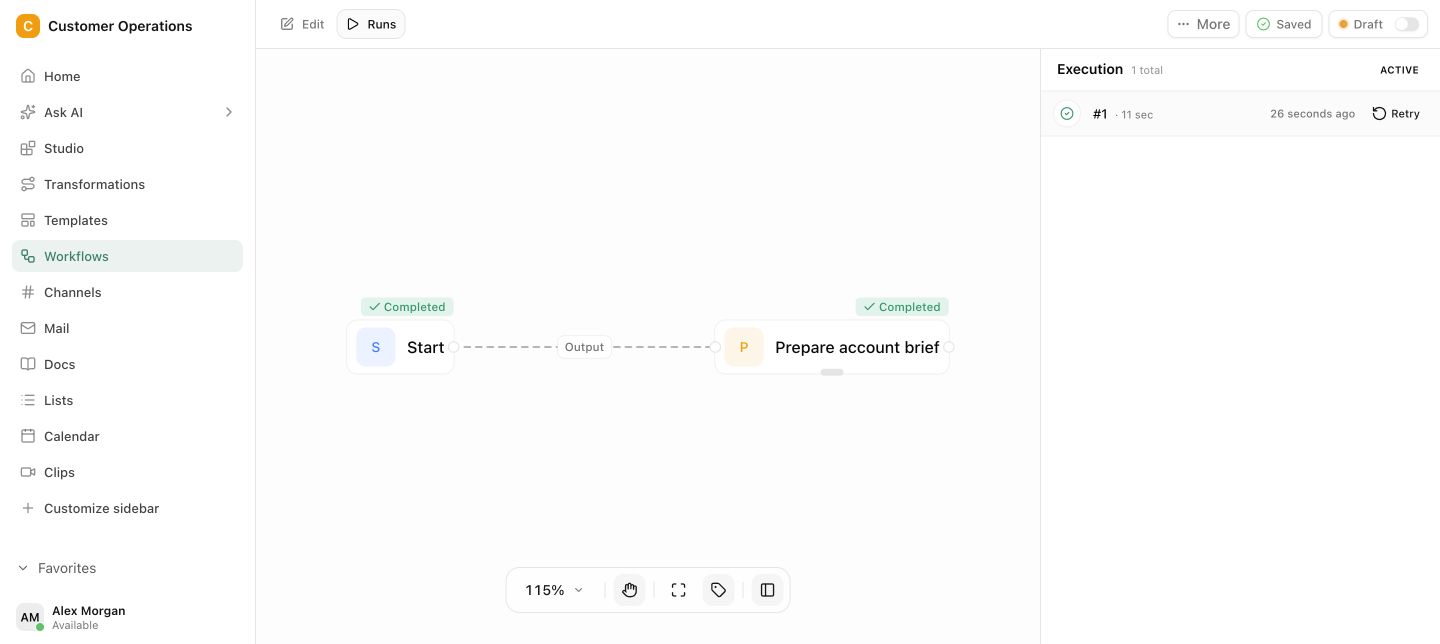
Pharen Hub is an Open Fair-Code AI workspace from Germany with team chat, projects, documents, workflows and AI agents. It runs on Hetzner, Azure, AWS, Google Cloud or your own server and works with customer-owned, self-hosted or OpenAI-compatible models. All figures as of 19 September 2026.
5,000 seats. That is the size from which Langdock lists on-premise operation on its own security page. DeutschlandGPT writes on its security page: “Wer On-Premises braucht, braucht ein anderes Modell.” (If you need on-premise, you need a different product.) So a company of 80 people that wants to run an on-premise AI platform finds nothing at the best-known German vendors.
This guide shows which platforms can actually be self hosted, what that costs and when building it yourself with open source tools is enough. We are a vendor ourselves, which is why the statements about the others come from their own pages, checked on 19 September 2026.
Which AI platform can run on-premise?
| Vendor | Headquarters | On-premise or self hosting | Condition | Models |
|---|---|---|---|---|
| Pharen Hub | Germany | Yes | Self hosted licence from €20, no minimum number of users | Selected, customer-owned, self-hosted or OpenAI-compatible models |
| Mistral Vibe | France | Yes | On the Enterprise plan only | Mistral models, custom fine-tuning on Enterprise |
| Langdock | Germany | Yes | Single tenant from 2,000 seats, on-premise from 5,000 | More than 40 models, own API keys possible |
| innoGPT | Germany (Vechta) | Mentioned in its own blog, not confirmed on the security page | Ask the vendor | More than 50 models |
| DeutschlandGPT | Germany | No | Hosting in the Open Telekom Cloud, Magdeburg and Biere | GPT, Claude, Gemini, Llama, Mistral |
| Microsoft 365 Copilot | USA | No | EU Data Boundary, Anthropic models excluded | Provided by Microsoft |
| Google Workspace with Gemini | USA | No | EU data region selectable from Business Standard | Google models |
| Notion AI | USA | No | EU data residency on Enterprise only | Third parties as subprocessors |
| ChatGPT Business and Enterprise | USA | No | European data residency for new Enterprise workspaces, according to OpenAI | OpenAI models |
Sources: Langdock Security, DeutschlandGPT security, innoGPT data protection and security, Mistral Vibe, Microsoft Learn on Copilot privacy, Google Workspace data regions, Notion data residency, OpenAI on data residency in Europe.
The full tables on scope, prices and certificates are in the AI platform comparison 2026.
What exactly does on-premise mean for an AI platform?
On-premise means the platform runs in an environment you control. That can be a server in your own building or your own instance at a hosting provider of your choice. Pharen Hub runs on Hetzner, Azure, AWS, Google Cloud or your own server.
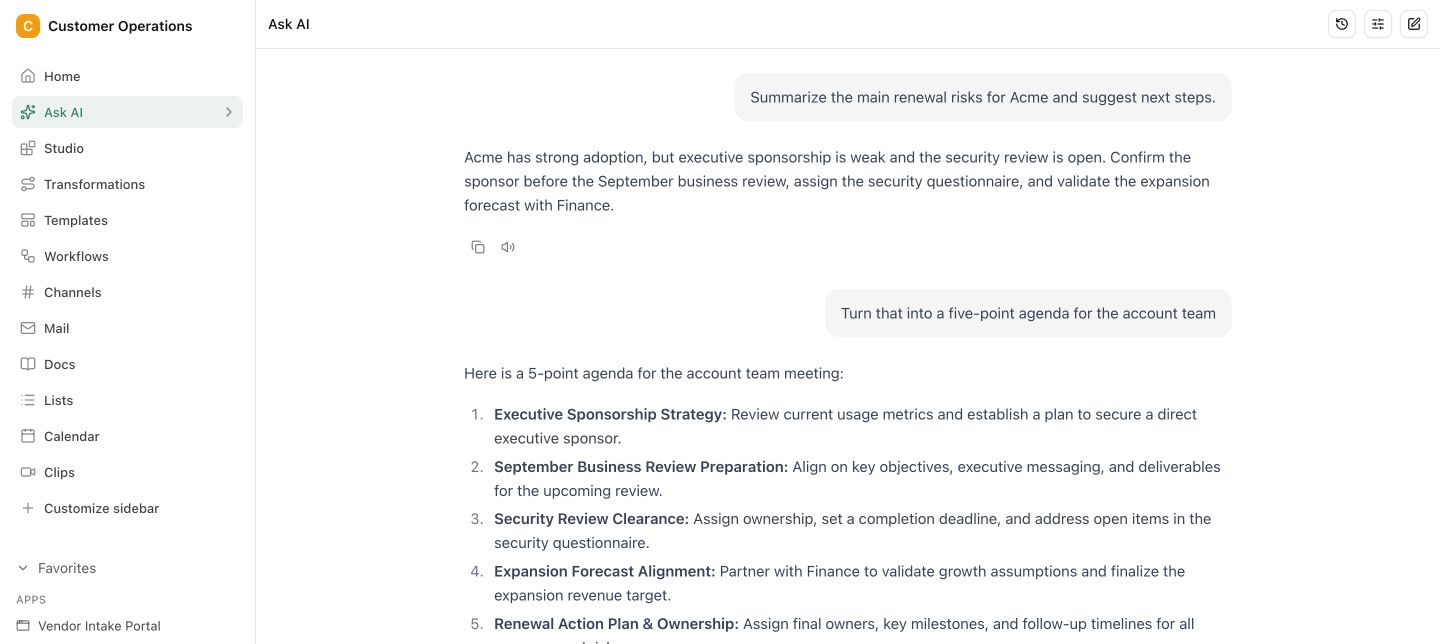
You have to separate two layers. The first is the platform with your tasks, documents, customer data and workflows. The second is the language model that handles the requests. A self hosted Pharen Hub with a US model behind it sends requests to that model. If you want to rule that out, connect your own or a self hosted model. Only then does all processing stay in your environment.
Is a do-it-yourself stack with Ollama, vLLM and Open WebUI enough?
Your own stack with Ollama or vLLM as the model server and Open WebUI as the chat interface is set up in an afternoon. For a single team that wants to try out models, that is often the right path: no licence, full control over the models, everything stays on your own server.
A stack like that covers model serving, a chat interface and usually a simple document search. In day-to-day operation you then lack roles and approvals for agents, a log of who used which data and when, the connection to mail, calendars, lists and cases, and repeatable workflow runs with review steps. You also need someone who installs updates.
Building it yourself fits when one team is experimenting and no compliance requirement is involved. A maintained product becomes cheaper as soon as several teams share the same context, agents are supposed to carry out tasks with approvals, or your IT has to provide evidence for data protection.
What does an on-premise AI platform cost?
At Pharen Hub the self hosted licence starts at €20. Your own costs for servers, operation and the models you use come on top. For Langdock and Mistral we found no public prices for on-premise operation on the vendor pages.
If you do not want to run it yourself, you start in the managed cloud: Free, Starter for €25, Team for €79 and Pro for €199 per workspace and month. The details are on the pricing page.
Sources: Langdock pricing, Mistral pricing.
When is on-premise worth it, and when is it not?
On-premise makes sense when customer data must not leave certain environments, when your IT wants to control infrastructure, logs and access concepts itself, or when AI agents are supposed to work with sensitive documents.
The managed cloud fits better when you want to start quickly, have no infrastructure team of your own, or the first workflow is not highly sensitive. With self hosting, you carry the responsibility for infrastructure, backups and updates.
We name one limit openly: Pharen Hub does not currently list an ISO 27001 certification. If a vendor certificate is a purchasing condition, you run Pharen Hub inside your own certified environment or choose a vendor with a certificate. The guide to the self hosted AI workspace describes the background on operation.
Frequently asked questions
Which AI platform can I run on my own servers?
Three of the nine platforms we checked can be self hosted. Pharen Hub with a self hosted licence from €20, Mistral Vibe on the Enterprise plan and Langdock from 5,000 seats. DeutschlandGPT explicitly rules out on-premise, and Microsoft, Google, Notion and OpenAI do not offer it.
Is an on-premise AI platform automatically GDPR compliant?
No. With self hosting, the workspace data stays on your infrastructure, and you decide on storage location, access and deletion. Whether other providers process data depends on your models and integrations. How to check that is described under GDPR compliant AI.
Can I also use local language models on-premise?
Yes. Depending on the setup, Pharen Hub works with customer-owned, self-hosted or OpenAI-compatible models. You decide in the configuration which models you connect.
Can we start in the cloud and move on-premise later?
Many teams start in the managed cloud because getting started is faster, and look at self hosting later. If you are planning that route, talk to us early about your setup.
What does Open Fair-Code mean for Pharen Hub?
The code can be inspected and adapted, and commercial use is licensed. Open Fair-Code is not the same as open source. The explanation is under Open Fair-Code AI workspace.
So the company of 80 from the opening does not have to grow to 5,000 seats. On-premise exists for it, just not at the vendors that top most lists. If you want to test that with a process of your own, talk to us.
