



The supplier is right. The amount matches. The invoice is due on Friday. Yet it is still sitting in the queue.
Consider an invoice for work shared by two projects. The document names neither. An AI can read every line correctly and still be unable to tell which project should pay. If it guesses, the invoice looks ready precisely when it needs a question.
The workflow now needs a route for the missing project assignment. Reading the document was only its first step.
Last month’s invoice is a tempting shortcut
The same supplier billed Project A last month. Assigning this invoice to Project A would fill the empty field and keep the workflow moving. It could also be wrong. Suppliers work on more than one project.
The safer preparation is specific: capture the information present in the document, keep the original within reach and ask which project the work belongs to. The AI has reduced the reading. It has not manufactured an agreement.
If the invoice already contains structured fields, a normal import may do that first job without AI. Use the model where interpretation helps, rather than making it reread data your software can already process.
A question can be part of the workflow
Suppose the person who ordered the work needs to answer. Sending them “please check” is not enough. They need the invoice and the exact question: was this work for Project A, Project B or both?
Their answer belongs with the invoice. If they split the cost, the reviewer should see that explanation too. Otherwise the next colleague has to find the private message before doing anything else.
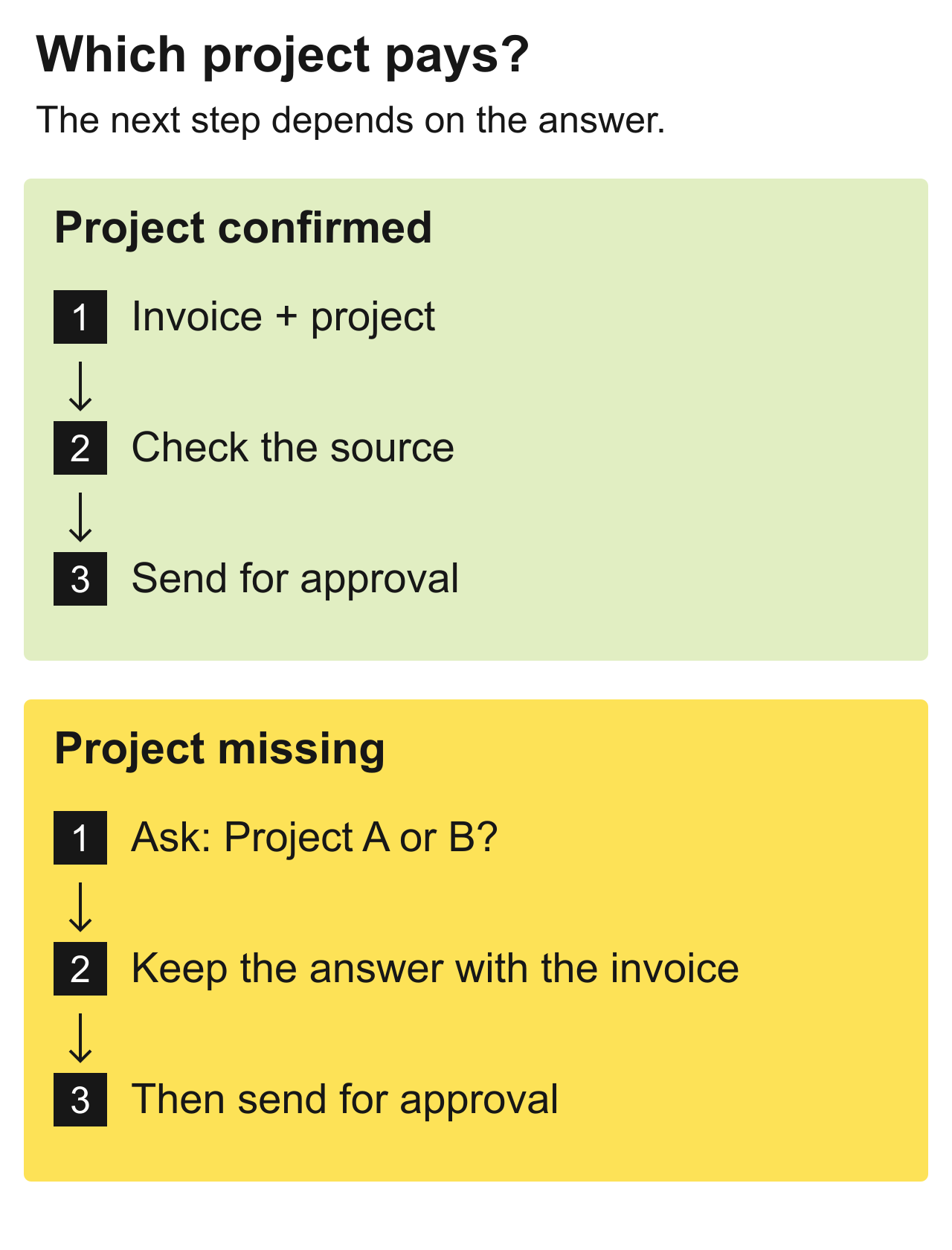
The pause has now done a job. It has turned an unknown assignment into a question someone can answer, while keeping the rest of the preparation intact.
Then Friday gets closer
What happens if that person is away? Waiting indefinitely is not a complete process. The team needs an agreed way to ask a substitute or escalate the question before the due date.
This part usually needs ordinary rules: a reminder after the agreed interval, a visible reason for waiting and a person who can take over. Another language-model call will not establish who is covering a colleague’s leave.
Once the assignment is confirmed, the invoice can continue to review. Approval and payment still follow the company’s own rules. The fact that a model read the document does not grant it permission to move money.
Make the difficult invoice the demo
Run the complete version first. Then remove the project assignment. Finally, submit the same invoice again. Decide beforehand where each should end up: ready for review, waiting for an answer or flagged as a possible duplicate.
Watch what the reviewer has to do. If they must reopen several tools to understand why the invoice stopped, the workflow has moved the effort rather than removed it.
How does Pharen Hub handle the missing project?
In Pharen Hub, you can use Lists to keep the supplier, amount, due date and project assignment on an invoice record. Workflows connects that record to the review and approval steps. An agent can prepare information; the assigned reviewer checks it before the process continues.
For this invoice, we would configure a missing-project check before approval. The question and confirmed assignment stay with the record. The documented invoice workflow also includes reminders and a handoff to accounting. The intake and accounting connection are set up for the systems your team uses; payment remains a separate authorised decision.
If you want to build that route for your team, bring us an anonymised invoice that gets stuck.
